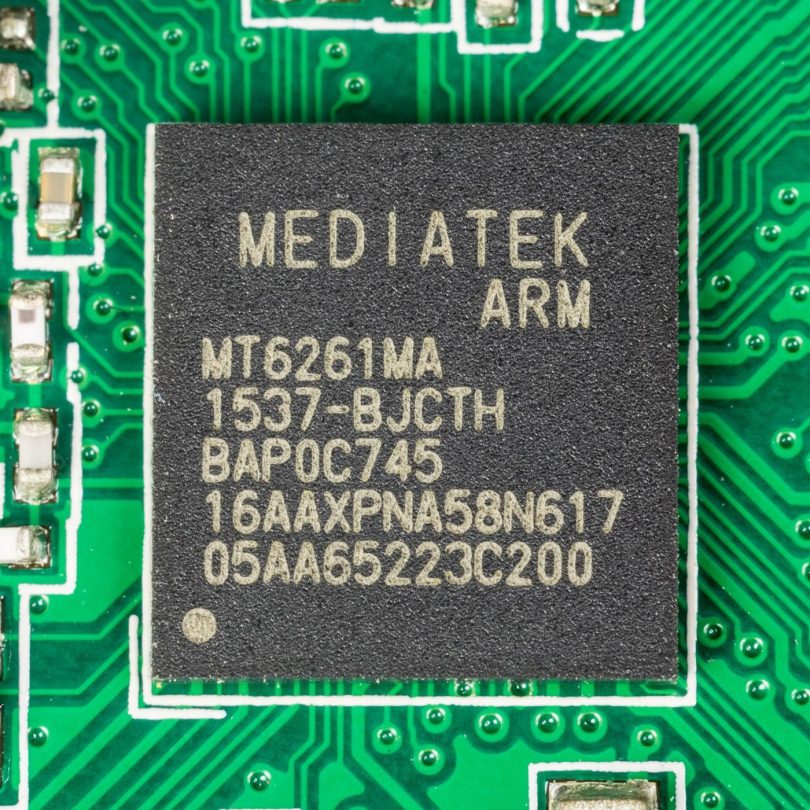

Smartphone processors have crossed a threshold that changes where artificial intelligence actually runs, with larger models now working directly on handsets instead of distant servers. Chip designers have added dedicated neural blocks, faster memory pathways and compression methods that shrink models without badly weakening their answers. The result is that translation, photo editing, voice assistance and document summaries can happen on the device itself, even without a signal. That shift carries privacy benefits, because personal text, images and recordings need not leave the phone for routine tasks. It also cuts delay, since answers no longer wait for a round trip to a data centre, and it lowers running costs for services used billions of times daily. Engineers achieve the feat by trimming numerical precision, caching frequent calculations and splitting work intelligently between efficiency and performance cores. Heat remains the central constraint, because a phone has no fan and little room to shed warmth during sustained tasks. Designers therefore schedule intensive work in short bursts and monitor skin temperature continuously. Independent reviewers say the best current handsets handle impressively capable models, though the largest cloud systems still lead on complex reasoning. For everyday use, however, capable local intelligence is becoming the feature buyers notice most.
What the Evidence Shows
Manufacturers expect on-device intelligence to reshape how applications are built, with developers designing smaller specialist models rather than relying on one giant remote system. A travel application might carry its own translation model, a health application its own symptom organiser, each updated separately and able to work fully offline. That modular approach also helps regulators, because sensitive categories of data can be processed under clearer local rules. Battery impact is improving as dedicated silicon performs the same work for a fraction of the energy a general processor would consume. Still, questions remain about consistency, because two phones running different local models may answer the same question rather differently. Industry groups are developing shared benchmarks that measure accuracy, speed and energy together, rather than headline speed alone. Security researchers welcome local processing but warn that models stored on devices must be protected against tampering and extraction. Chip makers respond with signed model packages and hardware backed storage for the most sensitive components. As memory capacity rises in mid range handsets, features once limited to flagship phones are spreading quickly. The direction is clear, with intelligence moving steadily from remote servers into the pocket. Reporting and analysis from sources such as IEEE Spectrum track the same developments, and specialists following on-device phone AI chips say the direction is now consistent across independent lines of evidence.
The Wider Context
Adoption of on-device phone AI chips follows a familiar pattern with an unfamiliar speed. Early users tolerate rough edges in exchange for advantage, mainstream users arrive when the tool disappears into existing workflows, and the market consolidates around whoever made that transition feel effortless. Vendors are racing less on raw performance now than on integration, support and trust.
What Happens Next
The realistic forecast for on-device phone AI chips is steady integration rather than sudden replacement: embedded in products people already use, improving in increments, and regulated in proportion to its reach. The companies and institutions that plan on that basis, training staff and redesigning processes instead of chasing launches, are the ones the adoption data tends to vindicate. You can follow related developments in our coverage of technology.
It is also worth remembering how quickly the picture in this area has changed before. Positions that looked settled a few years ago have been revised as new data arrived, and the same humility is appropriate now. The strongest coverage of this subject, and the most useful advice, tends to come from sources that update their views openly when the facts move, rather than defending an earlier position long after it has stopped fitting the evidence available.