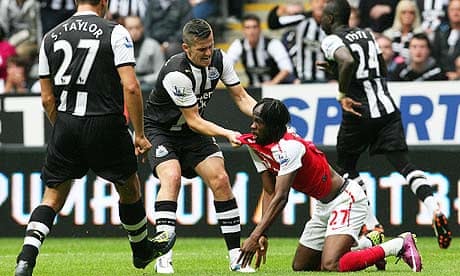
The 2011/12 English Premier League campaign is highly regarded for its tactical variety, but for modern analytical observers, its greatest value lies in the predictable timing of defensive breakdowns. While long-term seasonal metrics often smooth over the nuances of how a team performs across a 90-minute match, isolating the opening 15 to 30 minutes reveals a profound structural divergence among lower-tier and transitioning clubs. Several squads during this historic season suffered from an inability to establish concentration right from the opening whistle. For strategic operators engaging in live game or in-play reading, these chronic slow starters presented a highly lucrative opportunity to exploit specific first-half handicaps, early goal totals, and next-team-to-score markets before the pre-match lines could naturally adjust to the mounting chaos on the pitch.
Why Slow Tactical Mobilization Routinely Destabilizes Opening Lines
The underlying cause of early-game vulnerability usually stems from flawed warm-up protocols or over-ambitious, experimental tactical setups implemented by under-pressure managers. In the context of the 2011/12 season, struggling clubs frequently attempted to deploy high-pressing systems at home to appease the local fan base, despite lacking the athletic center-backs or disciplined midfields required to sustain such a shape. When elite, vertically explosive opponents exposed these gaps within the opening ten minutes, the entire tactical blueprint collapsed.
This delayed adjustment period created a recurring structural imbalance. Because bookmakers primarily rely on broad, historical datasets to formulate their pre-match Asian handicaps, they often fail to capture a squad’s acute psychological unreadiness during the initial phase of a match. Consequently, when an analytical live observer identifies a defensive unit consistently missing second-ball assignments or failing to track overlapping full-backs in the opening minutes, the pre-match price becomes fundamentally flawed, opening a brief window of premium value on the opponent to strike first.
Mapping First-Half Defensive Deficits Across Specific Squad Profiles
To execute an effective in-play strategy, one must move past general assumptions and look directly at the clubs that displayed quantifiable tracking errors during the early stages of matches. The 2011/12 season featured a few prominent repeat offenders who consistently bled goals before the stadium clock ticked past the 30-minute mark.
By tracking the precise timing of when these vulnerabilities manifested, we can categorize how specific teams reacted to early offensive pressure. The sequence outlined below demonstrates how specific defensive setups reliably broke down, altering the live risk profile of the game.
1.Identify the Habitual Slow Starters:Minutes 1–15.
Teams like Blackburn Rovers and Wolverhampton Wanderers frequently entered matches with uncoordinated central defensive pairings, resulting in a high volume of goals conceded in the first quarter-hour due to missed offside traps.
2.Monitor the Transition Phase:Minutes 16–30.
As the early pressure mounted, these struggling backlines would drop into a low block out of sheer panic, leaving their midfield entirely isolated and vulnerable to long-range strikes or set-piece concessions.
3.Exploit the Live Market Inefficiency:In-Play Window.
Once the patterns emerged in real-time, the live first-half goals line became the primary target for smart money, capitalizing on the high probability of a multi-goal first half before the trailing team could reach the safety of the halftime interval.
This chronological degradation shows that these early goals were rarely random occurrences; they were the inevitable result of structural unreadiness. Blackburn Rovers, in particular, suffered immensely from chaotic defensive organization under Steve Kean, which regularly caused them to trail early at Ewood Park. Recognizing this pattern allowed live readers to act decisively before the live market adjusted the goal lines upward.
The Interplay Between Early Concessions and Live In-Play Odds Variance
The mechanical behavior of live betting markets dictates that as time elapses without a goal, the price for a specific event will decay or adjust dynamically. However, when a team prone to early concessions surrenders a goal in the first ten minutes, the market undergoes a violent re-pricing phase that frequently presents counter-intuitive value.
To understand this volatility, it is useful to compare how different clubs distributed their defensive failures during the first half of the 2011/12 campaign. The table below outlines the primary teams that exhibited a severe front-loaded goal-concession bias.
| Club Profile | First-Half Goals Conceded | Peak Vulnerability Window | Primary Tactical Root Cause |
| Blackburn Rovers | 36 | Minutes 1–20 | Uncoordinated center-back tracking |
| Wolverhampton | 39 | Minutes 10–30 | Midfield pivot failing to screen the box |
| Bolton Wanderers | 33 | Minutes 5–25 | Full-backs caught too high in transition |
| Aston Villa | 24 | Minutes 15–30 | Low-block passivity allowing early crosses |
The statistical breakdown demonstrates that both Blackburn and Wolverhampton were absolute goldmines for first-half goals. The sheer volume of early deficits meant that their opponents’ first-half moneyline odds carried an exceptionally high implied probability of success that pre-match models routinely underestimated. For an in-play reader, seeing these teams step onto the pitch with passive defensive postures provided immediate justification to back a first-half breakthrough.
How Low-Block Passivity Invited Early Disaster for Aston Villa and Bolton
Aston Villa’s approach under Alex McLeish during the 2011/12 season offers an excellent look at how a negative tactical mindset can invite early disaster. McLeish favored an ultra-conservative, passive defensive shape designed to contain opponents rather than contest possession. While this strategy was meant to keep games tight, it frequently had the opposite effect early on, as elite opposition routinely pinned Villa back in their own box from the opening kickoff.
Because Villa refused to press the ball in the middle third of the pitch, technically gifted opponents like Arsenal, Manchester City, and Tottenham Hotspur were allowed to establish an immediate rhythm. This lack of pressure resulted in early crossing opportunities and set-piece situations that frequently breached Villa’s backline before they could adjust to the speed of the game. Live operators who noted this passivity at the start of matches could comfortably assume that the opposing team would dominate the first-half corner and scoring markets.
The Breakdown of Defensive Communication in High-Stakes Away Fixtures
The Psychological Collapse
The impact of an early goal on a relegation-threatened club playing away from home was incredibly destructive during this campaign. When clubs like Bolton or Wolves traveled to top-six venues, their defensive game plans were entirely dependent on surviving the initial 20-minute onslaught to frustrate the home crowd.
Executing the In-Play Pivot
When that initial resistance failed and an early goal was conceded, the defensive discipline disintegrated instantly. The trailing team was forced to abandon their compact shape much earlier than anticipated, creating massive gaps for the home side to exploit. Contrast this specific live scenario with a traditional, static pre-match evaluation where you are stuck with your initial positions. If you observe an away side concede an early goal while looking completely disjointed, the in-play landscape shifts entirely. Under these precise situational conditions, executing live read positions via a highly responsive online sports betting service like the modern ufa168 ดูบอล platform allowed strategic operators to capitalize on the rapidly compounding scoreline, often backing the home side to cover an amplified first-half handicap before the halftime whistle offered any chance for structural repair.
The Structural Failure of the Offside Trap in Steve Kean’s Blackburn Rovers
Blackburn Rovers’ 2011/12 campaign was a defensive tragedy defined by a fundamental lack of positional synergy. Steve Kean frequently altered his defensive personnel due to injuries and form lapses, deploying disjointed backlines that lacked the chemistry required to execute complex defensive maneuvers. Despite this limitation, Blackburn continuously attempted to play a relatively high defensive line during the early phases of home matches.
This combination of a high line and poor communication proved fatal against teams utilizing rapid, direct inside forwards. Blackburn’s center-backs consistently mistimed their steps when trying to spring the offside trap, gifting opponents clear one-on-one opportunities against goalkeeper Paul Robinson in the opening exchanges. The systemic nature of this failure meant that fading Blackburn’s first-half defensive capabilities was one of the most reliable trends of the entire season.
Capitalizing on First-Half Goal Lines Before the Market Adjusts
In modern live reading, timing is everything. When a match features a known slow starter, the optimal entry window for first-half goal totals typically occurs within the first 5 to 12 minutes of live play. If the game starts at a frantic pace but a goal has not yet been scored, the live odds for Over 0.5 or Over 1.0 first-half goals will briefly swell to highly attractive prices.
Smart operators during the 2011/12 season used this exact pacing mechanism to maximize their value. By waiting out the initial five minutes to ensure the referee was allowing a fluid game, they could lock in premium lines on matches involving Wolves or Blackburn. The underlying tactical metrics guaranteed that both teams would continue to surrender high-value chances, making the brief wait for an inflated live price a highly mathematically sound approach.
Why Mid-Table Indifference Accelerated First-Half Defensive Breaches
As the campaign entered its final third, a new variable emerged that significantly accelerated early-game defensive collapses: mid-table indifference. Teams sitting comfortably in 10th to 14th place with no realistic chance of European qualification or relegation began to display a distinct lack of physical intensity during the opening exchanges of late-season fixtures.
When these unmotivated mid-table squads faced teams desperately fighting for survival or Champions League revenue, the discrepancy in early-game intensity was staggering. The unmotivated sides frequently conceded soft, unforced errors in possession within their own defensive third, leading to rapid first-half deficits. Observing this motivational asymmetry allowed in-play readers to isolate games where the favorite would jump out to an immediate, uncontested early lead.
The Algorithmic Lag in Tracking Short-Term Positional Changes
A major reason these first-half trends remained exploitable throughout the 2011/12 season was the inherent lag in bookmaker algorithm adjustments. While live models are excellent at updating prices based on major events like goals or red cards, they are far less adept at quantifying subtle positional shifts, such as a full-back playing out of position due to a late pre-match injury change.
- Monitor the live positioning of auxiliary full-backs in the opening 5 minutes.
- Isolate instances where a central midfielder is forced to cover wide channels early.
- Track the volume of progressive passes allowed into the penalty box before minute 15.
- Evaluate the physical body language and tracking intensity during the initial two corner kicks.
When an analytical operator detects these short-term positional weaknesses in real-time, they are essentially viewing a completely different game than the one calculated by a static database. Indirect reference to this mathematical concept reveals why sharp live reading consistently outperforms rigid pre-match models; it is the exact same mathematical edge an individual seeks when calculating risk distributions across a premium portfolio on a sophisticated casino online website. Ultimately, success hinges entirely on exploiting the brief window of time where human observation recognizes a structural flaw before the automated data feeds can update the baseline parameters.
Summary
The 2011/12 Premier League season demonstrated that analyzing a team’s performance based purely on full-time results leaves immense value on the table. Teams like Blackburn Rovers, Wolverhampton Wanderers, and Bolton Wanderers exhibited chronic, structurally driven defensive vulnerabilities during the opening 30 minutes of matches, making them prime targets for first-half live exploitation. Whether due to uncoordinated offside traps, passive low blocks that invited early pressure, or systemic psychological collapses in high-stakes away games, these slow starters repeatedly allowed opponents to break the deadlock early. By shifting the analytical focus away from the final whistle and reading the tactical realities of the opening exchanges in real-time, strategic operators could consistently identify and exploit significant mispricings in the first-half live markets before the automated models could correct their lines.