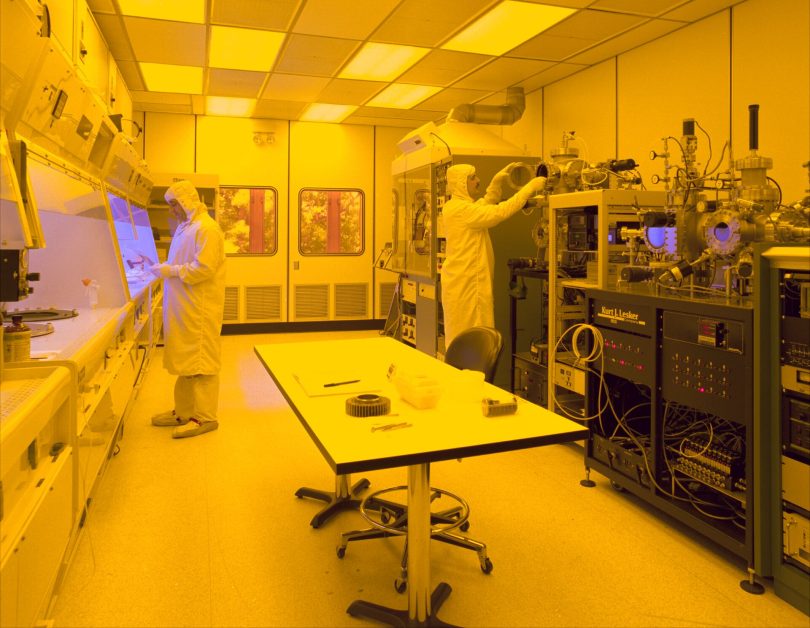

If you have ever wondered where the chips inside a car or a games console actually come from, a small town in upstate New York is becoming part of the answer. Japan is planning to invest up to $21 billion in two new GlobalFoundries factories in Malta, New York — a huge vote of confidence in a site that already hosts the company’s headquarters and its Fab 8 production plant.
This is a plain-English explainer of what has been announced, why governments are spending so heavily on chip factories, and what the expansion could mean for jobs and for the gadgets whose prices and availability depend on a steady chip supply. If you enjoyed our recent background piece at this recent article, this is the industrial-policy sequel.
A foundry, explained simply
GlobalFoundries does not design the headline chips in your phone. It is a foundry, which means other companies design chips and GlobalFoundries manufactures them in vast cleanrooms where silicon wafers are etched layer by layer. Its overview at GlobalFoundries’ website shows a business built on dependable, specialised chips: the kind that manage power, radios, displays and safety systems.
Those less glamorous chips are indispensable. A modern car can contain well over a thousand of them, and when supplies ran short a few years ago, assembly lines stopped even though the famous processors were available. Two more factories in Malta means more of these workhorse components made in the United States.
Why Japan is paying
Japan is not writing a cheque out of charity. Japanese companies dominate several essential niches in chipmaking equipment and materials, so a bigger Malta campus means more demand for Japanese tools and chemicals, plus a stronger voice in how allied supply chains are organised. Both governments have form here: the United States backs domestic fabs through the CHIPS and Science Act, whose research standards involve the National Institute of Standards and Technology, while Japan subsidises chip projects at home and with partners abroad.
The shared motive is insurance. Chips are mostly made in a small number of places, and recent years have shown how quickly shortages ripple through car prices, console launches and appliance deliveries. Spreading production across friendly countries costs more, but it makes the whole system harder to knock over.
A quick glossary for the curious
A few terms, since this story collects them. A fab is simply a chip factory — short for fabrication plant. A wafer is the thin silicon disc on which chips are printed in batches, like cookies on a tray, before being cut apart. A foundry is a company that manufactures other firms’ designs rather than its own, which is GlobalFoundries’ whole business. And a node describes the generation of manufacturing process, roughly its fineness; mature nodes are older, larger and, for most everyday electronics, entirely sufficient.
Keep those four and the rest of the story decodes itself: Japan is paying for two more trays in the world’s kitchen, in a town that already runs one of its biggest bakeries — because the world discovered, recently and painfully, that it had been relying on far too few kitchens.
What happens next in Malta
Fabs are marathons. Expect years of construction, followed by the painstaking installation of lithography and etching equipment, then hiring and training for highly skilled roles. The surrounding region gains in stages: builders first, then engineers and technicians, then the cafes, housing and services that follow any large employer, a pattern we traced locally in this related explainer.
For the rest of us, the effects are slower and quieter: a little more resilience in the supply of cars and electronics, and a little less drama the next time a shortage hits the headlines. Twenty-one billion dollars is a lot of insurance — but as recent years proved, running out of chips is expensive too.
And if the jargon ever multiplies beyond this glossary, remember the shape of the story rather than the vocabulary: the world’s most useful factories turned out to be too few and too clustered, and governments are now spending accordingly to spread them out.