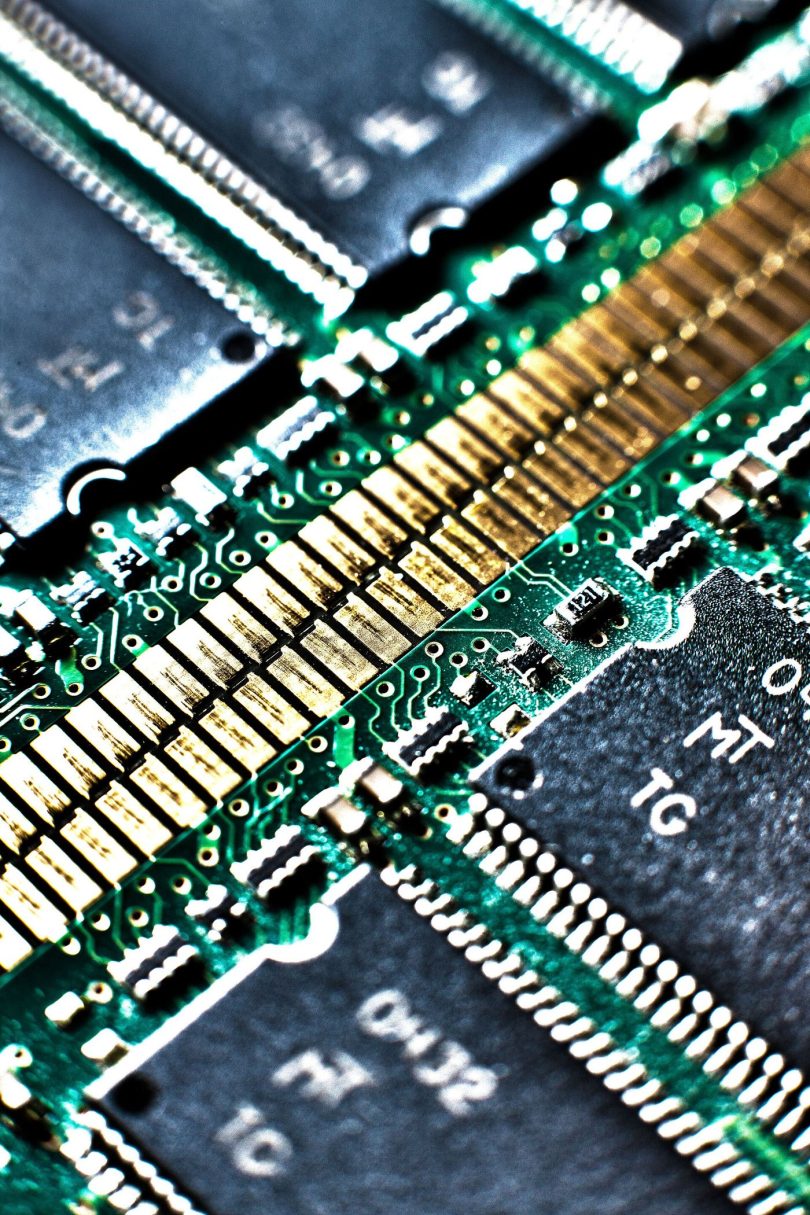

Microsoft has put its Maia 300 artificial intelligence chip at the centre of its infrastructure plans, presenting it as the main system that will run AI across its products. The third generation of Microsoft’s in-house Azure Maia family was announced on 12 October 2026, and it took a starring role at the company’s Ignite 2026 conference in San Francisco from 17 to 20 November. Maia 300 is built for inference, the work of running an AI model to answer questions rather than training it, and Microsoft says it is designed for long-context reasoning, low-latency conversation and multi-step agent tasks. Each chip carries eight HBM4 memory stacks with 288 gigabytes of memory and 18 terabytes per second of bandwidth, within a 950-watt power budget.
What the Evidence Shows
Microsoft expects Maia 300 to deliver 40 percent more tokens per megawatt than leading graphics-processor systems, and says a full rack of 96 accelerators will offer up to seven times the token throughput of its Maia 200 predecessor. Those are the company’s own claims, and the chip is not yet in production, with deployments starting in 2027. Microsoft plans to scale the Maia family to multi-gigawatt deployments, making it the primary inference system for Copilot, GitHub Copilot, Teams and its other AI services. The bet is that owning the silicon will cut costs and free Microsoft from depending entirely on outside chip suppliers. Reporting and analysis from sources such as IEEE Spectrum track the same developments, and specialists following Microsoft’s Maia 300 AI chip say the direction is now consistent across independent lines of evidence.
The Wider Context
Adoption of Microsoft’s Maia 300 AI chip follows a familiar pattern with an unfamiliar speed. Early users tolerate rough edges in exchange for advantage, mainstream users arrive when the tool disappears into existing workflows, and the market consolidates around whoever made that transition feel effortless. Vendors are racing less on raw performance now than on integration, support and trust.
What Happens Next
The realistic forecast for Microsoft’s Maia 300 AI chip is steady integration rather than sudden replacement: embedded in products people already use, improving in increments, and regulated in proportion to its reach. The companies and institutions that plan on that basis, training staff and redesigning processes instead of chasing launches, are the ones the adoption data tends to vindicate. You can follow related developments in our coverage of technology.
It is also worth remembering how quickly the picture in this area has changed before. Positions that looked settled a few years ago have been revised as new data arrived, and the same humility is appropriate now. The strongest coverage of this subject, and the most useful advice, tends to come from sources that update their views openly when the facts move, rather than defending an earlier position long after it has stopped fitting the evidence available.