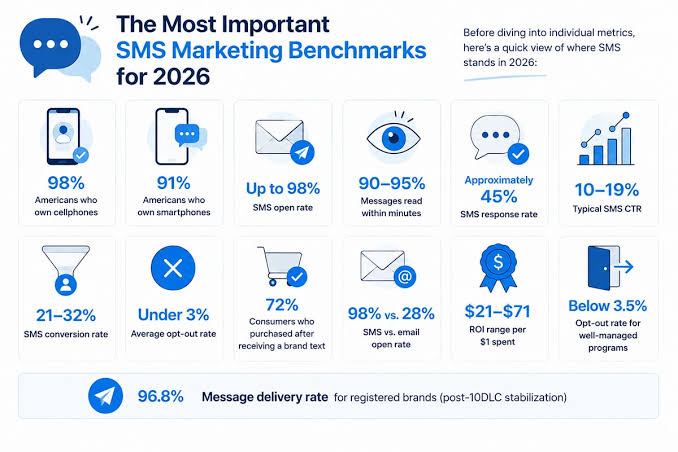

Businesses are constantly searching for better ways to reach customers, but one of the biggest marketing stories of 2026 involves technology that’s been around for decades. SMS marketing is attracting renewed attention as companies rethink how they communicate with increasingly distracted audiences. Between crowded email inboxes, changing social media algorithms, and rising advertising costs, reaching customers directly has become especially valuable. Text messaging offers something straightforward: a familiar communication channel that people already use throughout the day. Recent industry research suggests businesses are recognizing that opportunity, although customers are becoming more selective about the messages they welcome.
New Research Shows Growing Business Adoption
One reason SMS marketing is making headlines is the continued growth in business adoption. A 2026 SimpleTexting survey of 400 business owners and marketers found that 75.3% were using SMS marketing, compared with approximately 66% in the previous year’s research. The same report found that 65.4% planned to increase their texting budgets. These findings suggest that text messaging is becoming a regular part of marketing strategies rather than an occasional promotional tool. For smaller businesses, the appeal is understandable. A neighborhood restaurant can announce a lunch special, while a service provider can remind customers about upcoming appointments without requiring an expensive advertising campaign.
Consumers Are Paying Attention to Text Messages
Getting someone’s attention has become one of marketing’s biggest challenges. Fortunately for businesses, research suggests text messages still receive relatively quick attention. The 2026 Consumer Texting Behavior Report from EZ Texting found that 87% of surveyed consumers checked new texts within 15 minutes, while 89% had subscribed to messages from at least one business. Those numbers highlight the opportunity, but they also reveal a challenge. When customers receive more promotional messages, businesses must work harder to make each one worthwhile. A timely appointment reminder or genuinely useful discount is more likely to be appreciated than another generic sales announcement.
Personalization Is Becoming More Important
The days of sending identical promotions to every subscriber are becoming less appealing. Businesses increasingly recognize that customers have different interests, purchasing habits, and expectations. Someone who regularly purchases skincare products probably doesn’t want constant promotions for unrelated merchandise. Modern messaging platforms allow marketers to organize audiences into groups and deliver more relevant communications. Purchase history, customer preferences, and previous interactions can help shape these campaigns when businesses use that information responsibly. The goal isn’t to overwhelm subscribers with personalized advertisements. It’s to provide information that feels useful. After all, wouldn’t you rather receive a discount on something you actually need?
AI and Automation Are Changing the Conversation
Artificial intelligence is another reason business messaging is receiving attention in 2026. Automated systems can help companies respond to common questions, schedule reminders, and manage customer conversations without requiring employees to handle every interaction manually. Meanwhile, richer messaging technologies are expanding what businesses can accomplish through mobile communication. Bandwidth’s 2026 State of Messaging Report identifies AI, RCS messaging, and consumer trust as important developments shaping the industry. Still, automation needs thoughtful implementation. Customers should know when they’re interacting with automated systems and have access to human assistance when necessary. Technology works best when it makes communication easier rather than more frustrating.
Privacy and Customer Trust Remain Essential
Growing interest in SMS marketing also brings greater responsibility. Businesses must respect consent requirements, provide appropriate opt-out options, and avoid sending excessive messages. Regulatory developments in 2026 have kept communication compliance in the spotlight, reinforcing the importance of reviewing current requirements before launching campaigns. Frequency matters, too. Customers who initially welcome promotional texts may unsubscribe when messages become intrusive. Marketers should monitor complaints, unsubscribe rates, and engagement patterns rather than assuming more messages will produce better results. Building a healthy subscriber list takes patience, but maintaining customer trust is far more valuable than chasing temporary attention.
What Businesses Should Watch Moving Forward
SMS marketing’s growing visibility reflects a broader shift toward direct, convenient customer communication. Businesses that want to benefit should focus on useful content, thoughtful timing, and measurable results. Tracking conversions, customer responses, and unsubscribe rates can reveal which campaigns genuinely contribute to business goals. Text messaging won’t replace email, social media, or traditional advertising, but it can strengthen a coordinated marketing strategy. As 2026 continues, the businesses most likely to succeed won’t necessarily be those sending the most messages. They’ll be the ones giving customers a good reason to keep reading.